Sustainability
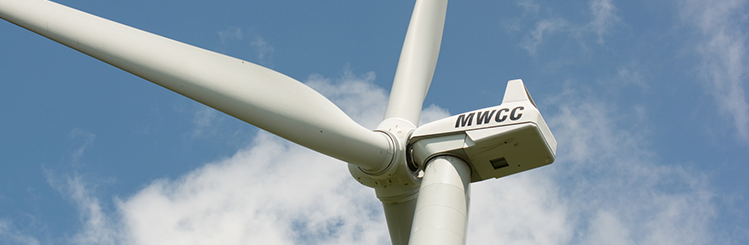


Aptly located on Green Street, Mount Wachusett Community College is a true example of how an institution can invest in clean energy, elevate awareness about the need for alternative energy solutions in the U.S., and ultimately address the global climate crisis.
When MWCC’s main campus was built in the early 1970s, electricity was expected to be an inexpensive commodity. Instead, the cost escalated, and by the late 1990s, the college was spending more than $750,000 a year on electricity alone – a figure that would top $1 million in today’s dollars. Under the administrative leadership of President Daniel M. Asquino and Resident Engineer and Executive Vice President Emeritus Edward R. Terceiro, Jr., the college sought renewable energy solutions while simultaneously implementing Energy Conservation Measures to drastically reduce energy consumption.
MWCC was at the forefront of the national climate movement when it converted its all-electric campus to biomass heating in 2002 to save on energy costs and reduce its carbon footprint. The tremendous success of that initiative – implemented at zero net cost to the college through grants and energy rebates – led to other renewable solutions, including solar and wind energy.
Over the past decade, the college increased in size to its present 450,000 square feet and nearly tripled the number of computers, yet through these innovative strategies, annual electrical consumption has dropped by nearly half – from 9 million kWh per year to 5 million kWh. The Energy Conservation Measures included lighting retrofitting, automatic lighting controls, a new pool cover, filter and ventilation system in the natatorium, and HVAC upgrades, again with the assistance of grants and energy rebates to defray costs.
MWCC’s wind energy project became an integral component in Gov. Deval Patrick’s 2007 executive order “Leading by Example – Clean Energy and Efficient Buildings.” The $9 million wind project, a collaboration between the college and key state agencies, was funded through $3.2 million in U.S. Department of Energy grants received through the support of Congressman John W. Olver, $2.1 million from a low-interest Clean Renewal Energy Bond (CREB); and $3.7 million from Massachusetts Clean Energy Investment Bonds.
The two 1.65 MW Vestas V82 wind turbines were activated in 2011 and now generate 100 percent of the college’s annual energy demand, plus return excess energy back to the power grid. With the college’s biomass heating, 100KW photovoltaic array, and solar domestic hot water technologies incorporated into the mix, MWCC generates nearly all of its energy needs on-site and is near carbon neutral.
“The wind energy project is the crowning achievement in our portfolio of green energy projects,” said Dr. Daniel M. Asquino. “Combined, these renewable technologies provide an invaluable learning tool for the general public as well as students pursuing green careers in our Natural Resources and Energy Management programs. The turbines have become a source of pride and a symbol of progress for the college and for the local community.”
These renewable technologies are integrated into teaching and learning experiences, particularly in MWCC’s Natural Resources Technology program. The message of sustainability is incorporated throughout the campus community. Members of the student club, The Green Society, helped initiate an organic Community Garden, an organic kitchen garden, single-stream recycling, and a composting program.
A charter signatory of the American College and University Presidents’ Climate Commitment (ACUPCC), MWCC has been recognized nationally for its success in renewable energy and conservation by organizations such as the U.S. Environmental Protection Agency, the Massachusetts Executive Office of Energy and Environmental Affairs, the ACUPCC, and the National Wildlife Federation.
Mount Wachusett Community College is dedicated to promoting and demonstrating the role of forest biomass as a sustainable renewable energy source. The college broke ground in April 2002 for the construction of a new wood biomass heating system that came on line for the 2002-03 heating season, replacing the current all electric system. This new system is saving the college an estimated $300,000 per year. A second phase of the project saw the installation of a biomass cogeneration system that provides heat, air conditioning, and electricity. Please see the stories of the Mount Wachusett Community College Biomass Conversion Project and the Mount Wachusett Community College CHP project using the links at left.
Definition: Wood (solid wood, tree trimmings, wood chips, sawdust, bark, and shavings) used to produce heating, electricity, or other forms of energy.
Wood has been utilized as a fuel since the beginning of civilization and it is still the main source of energy in many developing nations. Many homes in our region are equipped with fireplaces or wood stoves. Modern biomass energy, however, is similar to these traditional systems only in that they all use wood as a fuel. Tremendous technological advances over the past few decades are now resulting in wood biomass energy systems that are clean, efficient, and economical. Biomass is rapidly emerging as a locally produced alternative to fossil fuels.
Wood Biomass Energy is:
A description of the College’s conversion project is available and will be updated periodically. We have also prepared a report providing a three-year analysis of the Athol-Royalston Regional School District Wood Energy Heating Conversion Project.
Building on the College’s successful biomass conversion project, Mount Wachusett Community College is embarking on other renewable energy projects and initiatives.
Mount Wachusett Community College is located on a 280-acre site in Gardner, Massachusetts, in the heart of the snow belt. Built in 1974, the College contains approximately 450,000 square feet of classrooms, laboratories, library, theater, gymnasium, etc.
In 1996, at the request of the College and the Massachusetts Special Legislative Commission on Forest Management Practices, the Massachusetts Division of Energy Resources funded a study to assess workable solutions to lowering the high-energy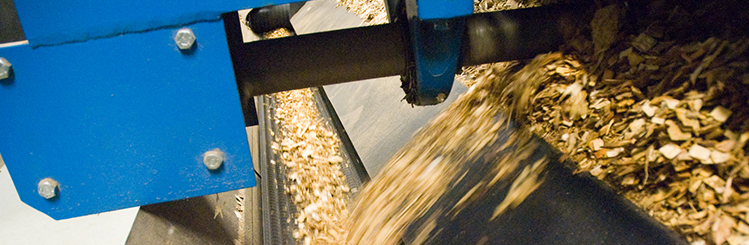 costs associated with the College operation. The study focused on the potential of converting the existing all-electric system to a biomass-fired hydronic system. Results of this study showed potential annual savings of $276,000 with a simple payback on investment (excluding financing) of 8.9 years.
Prior to our conversion, the College utilized electricity (with an insignificant amount of solar assistance) as its sole source of climate control, which includes its heating, lighting, and domestic hot water and air conditioning requirements. Because of its geographic location and its total dependency on electricity, the College’s utility bills have exceeded $750,000 per year.
Over the past several years, the College has implemented a variety of Energy Conservation Measures (ECMs) including: variable air volume (VA) conversion, installation of variable frequency drives on air handler units, chiller replacements, new efficient lighting, heat pumps, cooling tower replacement, domestic hot water conversion, replacement of unit ventilators and the installation of new domestic hot water heat exchanger. The recent ECMs have reduced total electrical consumption to approximately 8 million KWH at a cost of approximately $670,000. Heating, ventilating, and cooling account for 67.75% of this cost, while lighting, equipment and domestic hot water represent 27.6% and 4.7% respectively.
Phase I of the conversion project is complete. The centerpiece of the College’s efforts to address the energy crisis, however, has been the conversion of the College’s all-electric campus to a biomass hydronic system utilizing wood chip fuel. This phase of this project supplies 8 million BTUs per hour of hot water and will replace the equivalent of 3.4 million KWH of electricity while providing the heat for the campus. The total cost of this project is $4,337,911. The College was awarded $1,000,000 from the U.S. Department of Energy as part of the FY01 Energy and Water Development Appropriation Bill and was awarded $750,000 from the Massachusetts Technology Collaborative under the auspices of the Massachusetts Renewable Energy Trust Fund. The College has also secured approximately $107,146 in energy rebates from Massachusetts Electric for this project as well as $225,000 from the Massachusetts Division of Capital Asset Management, leaving $1,861,300 to be financed by a Tax Exempt Lease Purchase (TELP). For more information on the College’s biomass conversion project, please visit our fact sheet page. Follow this link to construction photos of our biomass heating plant.
The College entered into a shared saving agreement with NORESCO, the principal contractor for this project, which guarantees that the annual energy savings associated with the project ($286,467) will exceed the annual financing charge by a minimum of $8,520, resulting in a positive cash flow in year one of the project. By accelerating the installation of a number of the ECMs, the College also received a 25% bonus rebate of approximately $22,750 from Massachusetts Electric.
The College has entered into agreement with Community Power Corporation of Littleton Colorado to build and install a 50 kWe downdraft gasifier utilizing wood chips as the feedstock.
Partners in this $1,2000,000 research and development project include Congressman John Olver of Massachusetts and the US Department of Energy, Golden Field Office.
It is anticipated that this project will be installed in August 2006 and will provide 50 – 75 kW of electricity and approximately 420,000 Btu’s of thermal energy per hour. During the winter months the thermal energy will be added to the College’s existing biomass hydronic heating system and in the summer the thermal energy will power a twenty-ton adsorption chiller to provide air conditioning.
A 75 kW gasifier would result in displacing 682.65 tons of CO2 per year. This amount of electricity would service 44 homes/year with an assumed annual capacity factor of 73%.
Mount Wachusett Community College utilizes a 5 kWe photovoltaic array to increase our energy security and reduce our dependence on electricity from the grid.
In April 2006, the College submitted and application to the Internal Revenue Service to qualify for a Clean Renewable Energy Bond (CREB) to install an additional 100 kWe of photovoltaic panels on the main building. Our partners include the Massachusetts Technology Collaborative, Mass Development Finance Agency, and the Massachusetts Executive Office of Environmental Affairs; Sustainability Office on this $870,000 project.
Previous to submittal of our proposal, a feasibility analysis and report was performed by a photovoltaic specialist. According to this analysis this location has all the attributes necessary to support the design and installation of a large photovoltaic system without additional roof, building or electrical room modifications.
This project is expected to produce 122,000 kWh annually. The photovoltaic installment will utilize low angle support racks of a non-roof penetrating design. The flat roof of this three story building has large unobstructed open areas that can be utilized to arrange significant surface areas of PV modules.
Mount Wachusett Community College’s application for a Clean Renewable Energy Bond was approved by the US IRS for a 100 kW photovoltaic array. Funding has been secured as follows:
In preparation of the new 100kw photovoltaic array, the College recently installed a new white thermoplastic roof membrane developed by Duro-Last Roofing Inc. Also included in this project was additional insulation. The white roof is expected to increase the efficiency of the new solar panels by reducing heat.
The 100kw photovoltaic array contract has been signed and installation is expected in fall 2008.
Mount Wachusett Community College entered a new era of sustainability with the addition of two 1.65 MW wind turbines. Activated in March 2011, the Vestas V82 turbines are expected to generate 97 percent of the college’s annual electricity demand, plus return an additional 30 percent of power back to the grid.
MWCC’s wind energy project is an integral component in the Massachusetts Leading by Example Program initiated by Gov. Deval Patrick to achieve statewide goals for clean and renewable energy.
The wind project is a collaboration between the college, and the Massachusetts Division of Capital Asset Management, the Department of Energy Resources, the Executive Office of Energy and Environmental Affairs, and the Executive Office of Administration and Finance. The JK Scanlan Company, Inc. of Falmouth, Mass. served as general contractors, and numerous Massachusetts companies were involved in the construction.
The $9 million project is being funded through $3.2 million in U.S. Department of Energy grants, $2.1 million from a low-interest Clean Renewal Energy Bond (CREB); and $3.7 million from Massachusetts Clean Energy Investment Bonds.
Mount Wachusett Community College entered a new era of sustainability with the addition of two 1.65 MW wind turbines. Activated in March 2011, the Vestas V82 turbines are expected to generate 97 percent of the college’s annual electricity demand, plus return an additional 30 percent of power back to the grid.
MWCC’s wind energy project is an integral component in the Massachusetts Leading by Example Program initiated by Gov. Deval Patrick to achieve statewide goals for clean and renewable energy.
The wind project is a collaboration between the college, and the Massachusetts Division of Capital Asset Management, the Department of Energy Resources, the Executive Office of Energy and Environmental Affairs, and the Executive Office of Administration and Finance. The JK Scanlan Company, Inc. of Falmouth, Mass. served as general contractors, and numerous Massachusetts companies were involved in the construction.
The $9 million project is being funded through $3.2 million in U.S. Department of Energy grants, $2.1 million from a low-interest Clean Renewal Energy Bond (CREB); and $3.7 million from Massachusetts Clean Energy Investment Bonds.
Background:
To implement its wind energy program, MWCC engaged in a number of studies:
In 2007, Mount Wachusett Community College was named a winner in the National Wildlife Federation’s Campus Ecology Chill Out contest. The competition recognizes colleges and universities around the country which are implementing innovative programs to reduce the impacts of global warming, the #1 environmental threat facing the nation. Mount Wachusett was one of eight winning schools chosen from over 100 competition entries received from colleges nationwide.
“Colleges and universities are key places for demonstrating how to reduce emissions of carbon dioxide, the major culprit of global warming,” says Julian Keniry, Director of Campus and Community Leadership for the National Wildlife Federation. “Mount Wachusett has demonstrated its leadership in promoting renewable energy options both on campus and throughout the surrounding community.”
This prestigious award was given because Mount Wachusett’s staff has aggressively pursued numerous initiatives and projects to decrease the College’s dependence on fossil fuels and to educate its students and community on the benefits associated with utilizing renewable energy options.
The College’s conversion of its all-electrical campus to a heating system run on locally-available bio-fuels has drastically reduced greenhouse gas emissions while having a positive impact on the College’s operating budget. By eliminating electricity as a heat source, the college has reduced electricity use by 45.9 percent and saved two million dollars.
This project, along with related energy conservation measures has resulted in a 24 percent reduction of greenhouse gas emissions over the past four years, the equivalent of 7638 tons of carbon dioxide.
The National Wildlife Federation’s Campus Ecology Program has been an integral part of the campus greening movement since 1989. The nation’s 4,100 colleges and universities educate more than 15 million students in any given year making these schools important laboratories for creativity and innovation – keys to tackling a monumental crisis like global warming.
The National Wildlife Federation is America’s conservation organization protecting wildlife for our children’s future.
MWCC is a sustainability leader by using innovative financing and thinking.

Your journey starts with a single step. We have all the information you need to move forward with confidence. Reach out today to learn more about life at The Mount and how to get started.
