All Your Allied Health Degree FAQs Answered
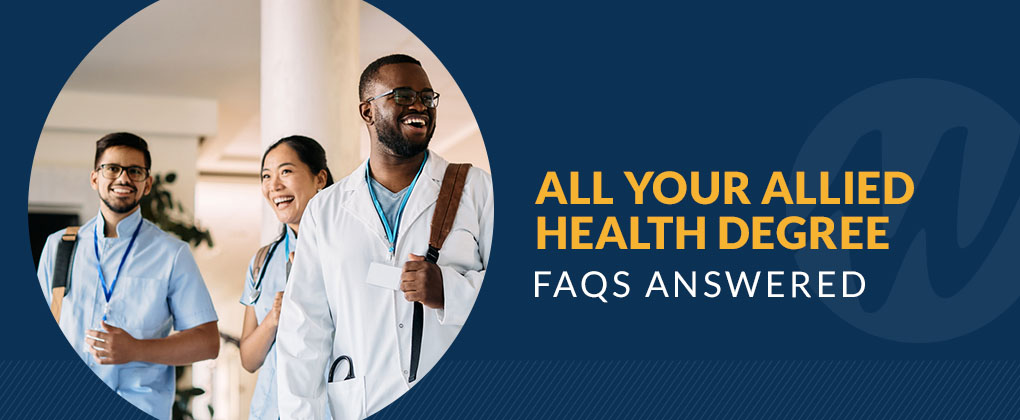


Are you thinking about pursuing a career in allied health but unsure where to start? There are various career paths within the allied health profession, so it may be challenging to decide which is best for you. So, naturally, you may have a few allied health degree FAQs.
We’ll break down the essentials of allied health degrees to help you make informed decisions and find your path with confidence.
An allied health associate degree is all about preparing you for a health care career that supports patients. This associate degree program prepares students to enter a bachelor’s degree program in a health care field like nursing or paramedicine. It’s a great entry-level degree that allows students to complete prerequisites for their next degree.
With this degree, you’ll learn the skills to help prevent, diagnose, treat and manage health issues. This degree could also allow you to manage health care systems and medical equipment. You’ll typically find yourself working hands-on with patients to help them recover and get back on their feet.
There are lots of options, from associate’s to bachelor’s or even master’s degrees. It depends on the path you want to take. Some fields also offer certifications to help you specialize and boost your career.
So, is allied health a good major? An allied health degree opens the door to numerous rewarding health care jobs, where you’ll make a real impact on people’s well-being daily. It’s a flexible and practical way to get into health care, no fluff — just a solid way to start helping people feel better.
There are various fulfilling and essential career paths you can choose with an allied health degree. The discipline you choose depends on your area of interest — whether it’s patient care or diagnostic work, there’s a path for you.
Let’s briefly discuss what you can do with an allied health degree.
As a nutritionist, you’ll help people make smarter food choices to feel better and stay healthy. Expect to spend a lot of time learning about nutrients and diets and creating personalized meal plans for clients. With an allied health associate degree, you can get a good introduction to nutrition.
While a nutritionist and dietician work in food and health, they have their differences. Dietitians usually have more rigorous licensing and may work in clinical settings, while nutritionists often work in wellness and community settings.
If breathing issues interest you, respiratory therapy is all about helping people breathe easier. You’ll learn to assist patients with lung conditions — like asthma — and perform breathing treatments with ventilators. Respiratory therapists play a huge role in patient comfort and recovery.
Radiologic technologists use medical imaging tools like X-rays and MRIs to assist in diagnoses. A radiologic technologist typically works in hospitals or imaging centers. If technology interests you and you’re detail-oriented, this could be an ideal path for you.
If you want to become an OTA, you’ll be working with patients, helping them improve their daily life skills. If you’re creative and enjoy helping people get back to daily activities, try pursuing an OTA career. With this job, you’ll be able to work at schools, nursing homes or hospitals.
Phlebotomists are the experts at drawing blood and making patients feel at ease with needles — no small feat! You’ll get plenty of practice with blood draws and learn techniques to make the experience smooth and safe. This job is all about precision and people skills, especially since you’re often the first step in a patient’s care.
If you’re up for an adrenaline-fueled job, EMTs are on the front lines of emergency care. You’ll learn how to assess injuries, perform CPR, stabilize patients in critical situations and tend to other emergency health care cases. As an EMT, you need to be calm under pressure and a quick thinker who can deliver life-saving care on the spot.
Sonographers use ultrasound technology to take images that doctors rely on to diagnose patients. Training may involve learning to operate ultrasound machines and capture the best images. You must also be able to spot what’s normal and what’s not. It’s hands-on and tech-focused, and you’ll work closely with patients who rely on your skills to get a clearer picture of their health.

The average salary for an allied health degree in Massachusetts ranges from $40,000 to $80,000 a year or more. However, salaries for allied health roles in MA can vary greatly depending on your specialization and level of education. This broad pay range shows that your earning potential is based on your experience, skills and location. Despite this variability, MA is a top-paying state for allied health jobs.
If you’re passionate about helping people and want a career that’s meaningful and stable, an allied health degree is a solid choice. Review the following factors when considering if allied health is a good degree to get:

Ready to jump-start your career in health care? Consider the Allied Health program at MWCC, which can prepare you for specialized roles in nursing, dental hygiene and more.
You can also consider the Allied Health Care Certificate Program — with just eight courses, including four electives, you can take the first steps toward a degree or an entry-level position in a rewarding field.
Start building your future today and set yourself up for success in one of our advanced programs. Request more information and take the first step toward your dream career now!

Your journey starts with a single step. We have all the information you need to move forward with confidence. Reach out today to learn more about life at The Mount and how to get started.
