What Are The Top Continuing Education Options For Adult Learners?



You’re ready for a career change or advancement, but the thought of committing to a two-year degree feels overwhelming. The time, the cost, the commitment — it’s a lot to ask when you’re already managing work, family, and everything else life throws your way.
Continuing education options are designed for adults like you. Whether the goal is gaining a new credential, learning a specific skill, or pursuing a passion, there are options to suit different schedules and budgets.
Continuing education is post-secondary learning for adults who want to build new expertise or knowledge outside of a traditional degree track. It’s about personal and professional development on your terms. You build targeted capabilities that help you advance in your career or pursue something meaningful to you.
Going back to school as an adult serves career changers looking to enter a new field, professionals seeking a promotion or a credential, and lifelong learners who want to stay sharp. The difference between continuing education and a degree program comes down to focus and time. Degree tracks provide broad academic foundations over several years, while this approach focuses on specific, practical skills you can use right away to quickly enhance your professional toolkit.
When you start looking into the best continuing education programs for adults, there are three main categories. Each serves a different purpose, so understanding the distinctions helps you pick the right fit.
Certificate offerings are structured, curriculum-based pathways that lead to specific credentials employers recognize and value. They’re ideal if you’re making a significant career change or need in-depth knowledge in a new field. A series of courses builds expertise from the ground up, and you have credible proof of your abilities.
Non-credit courses for adults are short-term, highly practical training sessions that focus on a single, in-demand job skill. Think of learning a specific software platform, mastering a technical process, or gaining certification in a specialized area. This training may help you upskill when you need to stay competitive in your current role or qualify for a new opportunity quickly.
Community education classes are individual sessions you take for personal enrichment, hobby exploration, or testing the waters of a subject before making a bigger commitment. They’re low-pressure, flexible, and often affordable. Whether you’re curious about photography, want to brush up on a language, or try something creative, these classes let you learn without a major time or financial investment.
Are you asking yourself whether continuing education is worth it for career advancement? The data speaks clearly:
Increase your earning potential: Credentials can lead to higher pay. According to government earnings data, workers with an associate degree earn significantly more per week than those with only a high school diploma.
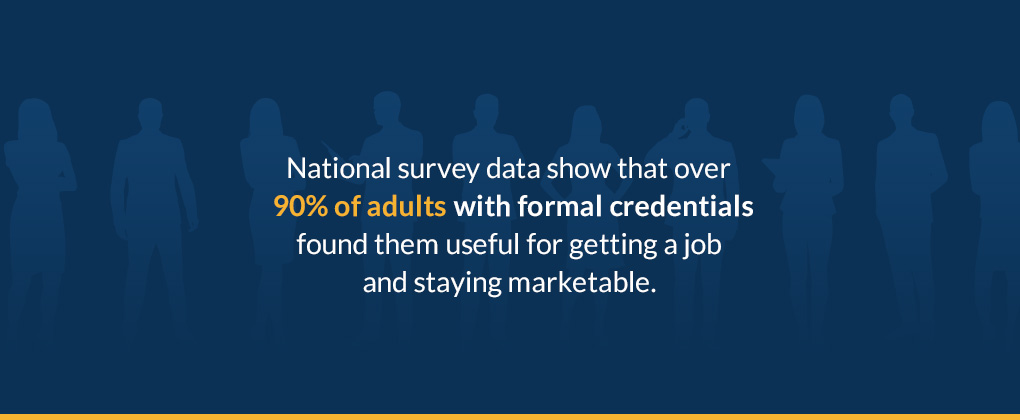
Gain a competitive edge: A certificate or license can make a real difference in the hiring process. National survey data show that over 90% of adults with formal credentials found them useful for getting a job and staying marketable.
Build the skills to pivot to a new career: These pathways are the most direct way to get the qualifications you need to start transitioning into a new industry or role.
Selecting the right option means aligning what you want to achieve with what’s actually available and realistic for your life. Smart choices support your career advancement, personal development, and financial well-being.
Start by researching your local job market. What abilities and credentials do employers in your area actually look for? Job postings for roles you want will list the qualifications that matter most. If possible, talk to people already working in the field — their insights help you avoid investing time and money in training that won’t move the needle in your career.
Can you complete the training online or in the evenings? What’s the total time commitment from start to finish? The cost of continuing education varies widely, so get specific numbers up front, including materials, time investment, and fees. An option that looks perfect on paper won’t work if it conflicts with your schedule or stretches your budget too thin.
Not all training delivers the same value. Look into the real-world experience of the instructors — do they teach from a textbook or from years in the field? Career outcomes for graduates matter, too. How many students finish, and where do they end up working? Quality providers stay transparent about their results and readily share success stories.
Community colleges are a good choice for adult continuing education. They’re affordable, flexible, and focused on serving local workforce needs. Instructors know the industries they teach, and class schedules accommodate people who work and have families.
Your local community college offers pathways designed for regional employers and returning students. You can explore programs for adult learners that match your goals, or browse hundreds of flexible online courses you can take from home on your own schedule.
These educational pathways are within reach. From professional certificates to workforce training, you have choices that fit your schedule and budget.
Mount Wachusett Community College (MWCC) provides high-quality, accessible, and affordable offerings that support returning students’ success. MWCC meets you where you are and moves you forward. Taking the next step doesn’t have to feel like a big leap. There’s no pressure — just a conversation with someone who understands what working adults need and how to make education fit your life.
Request more information today to explore what’s possible.

Your journey starts with a single step. We have all the information you need to move forward with confidence. Reach out today to learn more about life at The Mount and how to get started.
