What To Study To Become A Physical Therapist Assistant


Are you passionate about helping people regain mobility and independence? If so, becoming a physical therapist assistant (PTA) could be the perfect career for you. The market for health care professionals continues to grow, and that includes PTAs.
With an expected growth rate of 26% from 2022 to 2032, PTAs are in high demand. This growth can be a result of an aging population and an increased need for physical rehabilitation.
So, do you know what to do to become a physical therapist assistant? We’ll break down the essential steps, degrees and licensures required to kick-start your career as a PTA.
To become a PTA in Massachusetts, you’ll need to start with an associate degree from an accredited program. This degree prepares you to assist licensed physical therapists in various health care settings.
You can find PTA programs at community colleges — such as Mount Wachusett Community College’s Physical Therapy Assistant program — and some universities. Regardless of your chosen institution, the program must be accredited by the Commission on Accreditation in Physical Therapy Education (CAPTE) to ensure it meets national standards.
Accredited programs ensure you receive quality education and are well-prepared for the demands of the profession. Typically spanning about two years, PTA programs cover a range of subjects, such as:
But why an associate degree? This degree provides a focused education that directly prepares you for entry-level positions as a PTA. It equips you with hands-on experience and the skills needed to assist in rehabilitation and therapy sessions under the supervision of licensed therapists.
For PTAs, several undergraduate programs can be beneficial. It all depends on your career goals and educational background. Here are some common pathways:
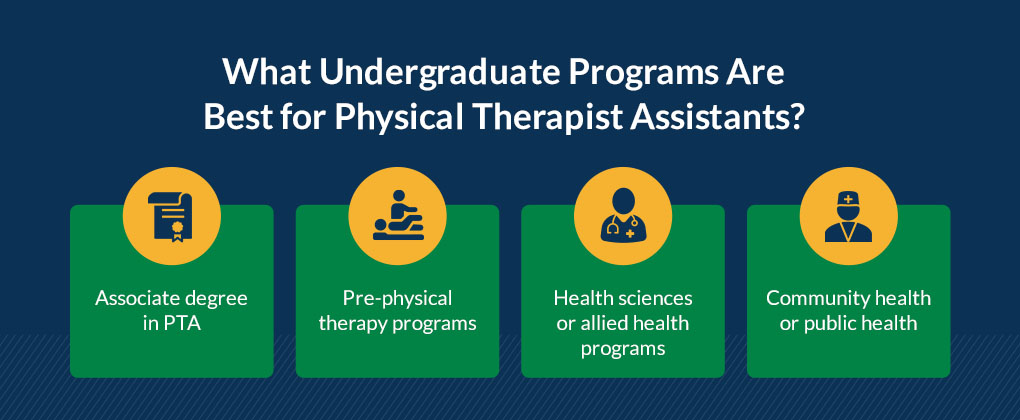
When choosing an undergraduate program, consider the specific prerequisites for PTA programs you’re interested in. Always ensure that your coursework aligns with those requirements. Also, gaining clinical experience through internships or volunteer work in health care settings can give you an edge.
You can expect a few tests and licenses on your journey to becoming a PTA — let’s discuss them.
So, once you’ve wrapped up your studies in a recognized PTA program, the next big hurdle is passing the National Physical Therapy Exam (NPTE). This exam is designed by the Federation of State Boards of Physical Therapy (FSBPT) to gauge how well you grasp the essentials of physical therapy.
You’ll be tested on everything from anatomy and physiology to hands-on patient care and ethical standards. Passing the NPTE is your ticket to becoming a licensed PTA and kicking off your career in the field.
Once you’ve conquered the NPTE, you’ll need to secure state licensure to legally practice as a PTA. Each state has its own set of hoops to jump through. You’ll need to prove you’ve completed an accredited PTA program and passed the NPTE with flying colors.
Some states might throw in extra requirements like background checks or a test on state-specific laws — called jurisprudence exams. Staying on top of these requirements is crucial, as they can vary quite a bit from state to state.
Now, while certifications aren’t always mandatory, they can seriously beef up your resume and open doors in your career. Think of certifications like the Certified Physical Therapist Assistant (CPTA) credential or specialized certifications in areas like pediatrics or geriatrics as badges of honor.
They show potential employers and patients you’re serious about your job. Take that leap and go the extra mile to master specific areas of physical therapy.
Once you’re licensed and maybe even certified, the learning doesn’t stop there. To keep your credentials current, most states and certifying bodies require PTAs to clock in some serious hours of continuing education (CE). You’ll need to complete a set of continuing education units (CEUs) to stay sharp in your field.
CE keeps you up-to-date on new treatments, changes in health care laws and the latest research. The ultimate goal of obtaining your CEUs is so you can provide the best possible care to your patients.
Once you’ve landed your license, keeping it current is key to staying in the game. Most states require PTAs to renew their licenses every couple of years. Renewal typically involves completing a set number of CEUs to ensure you’re up-to-date with the latest in your field.
So, stay on top of those renewal deadlines, knock out your CEU requirements, and keep doing what you do best — helping patients get back on their feet!
Got more questions? Find the answer in this list of frequently asked questions.
To become a PTA, you’ll need to take a mix of classes that prepare you for hands-on patient care and clinical settings. Classes like anatomy and physiology provide the foundational knowledge and skills necessary to assist physical therapists in helping patients recover from injuries and regain mobility.
Most PTAs pursue an associate degree in physical therapy assisting from an accredited program. This degree focuses on the coursework and clinical experiences needed to become a licensed PTA. While some colleges may offer related majors like health sciences or pre-physical therapy, the key is to ensure the program is accredited by the CAPTE to qualify for licensure.
Yes, pursuing a PTA degree can be very worthwhile. PTAs play a vital role in health care, helping patients with rehabilitation and improving their quality of life (QoL). The job outlook is positive, with strong demand expected due to an aging population and increasing health care needs. PTAs also enjoy competitive salaries and opportunities for career advancement. Being a PTA can be a fulfilling and financially stable career choice for those passionate about helping others.
If you have more questions in mind, we have the answers on our FAQs page about the PTA field.

Congratulations on exploring the path to becoming a PTA! At Mount Wachusett Community College (MWCC), we can help you achieve your goals with our accredited PTA program. Our commitment to quality education at an affordable price means you can start your journey without the burden of heavy debt.
Enjoy the benefit of small class sizes, personalized attention and hands-on experience from MWCC. Our high licensure pass rates and strong job placement record ensure you’re well-prepared for a rewarding career in this growing field. Plus, with our strong transfer agreements with many Massachusetts colleges, MWCC ensures your credits move with you toward a bachelor’s degree and beyond.
Take the next step and apply for a PTA associate degree at MWCC and stretch toward your career goals today! If you have any questions or need more information, feel free to send us a request, and we’ll get back to you.

Your journey starts with a single step. We have all the information you need to move forward with confidence. Reach out today to learn more about life at The Mount and how to get started.
