What Is The Difference Between An EMT And A Paramedic?
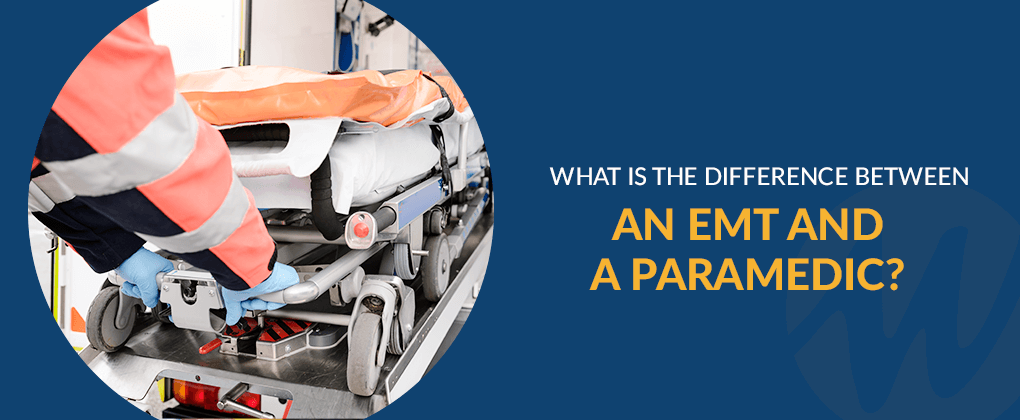


Emergency medical technicians (EMTs) and paramedics are first responders trained to treat patients in an emergency and transport them to a hospital, but is an EMT the same as a paramedic?
Emergency medical services (EMS) is the system that provides emergency medical care through a coordinated response. EMTs and paramedics both provide emergency medical services. When they arrive at an emergency, their roles seem similar. Some of their duties overlap — however, their training and the scope of care they perform differ.
If you are considering further studying to become an EMT or paramedic, this article will help you understand the differences between EMTs and paramedics. Read on to compare the two.
Quick Links
The difference between EMTs and paramedics lies in the amount and complexity of their education and training, and the level of care they provide. These differences include:
An EMT, or emergency medical technician, is a health care professional and member of the EMS. They provide immediate and basic emergency medical care to critically ill or injured patients. Massachusetts has over 22,000 certified EMTs, making them the most common EMS providers in the state.
In an emergency, 911 sends EMTs to a scene to work alongside the police and firefighters. EMTs examine a patient’s condition, stabilize them and transport them to the hospital in an ambulance. While in transit, EMTs are responsible for monitoring the patient and providing care until they reach the hospital. They also inform the hospital of the patient’s injuries or illness.
The steps you must take will vary by state due to the different legal requirements, though the general steps will be similar. You can receive two types of EMT training in Massachusetts — EMT-Basic and Advanced EMT.
EMT-Basic training programs involve lectures, demonstrations and practical applications of the skills necessary in emergencies. Topics covered during instruction include common medical emergencies, childbirth, working with children, environmental crises and extrication from motor vehicles. Following training, candidates sit for exams from the Massachusetts Office of Emergency Medicine (OEMS) and the National Registry of Emergency Medical Technicians (NREMT).
Here are the EMT-Basic requirements:
To become an advanced EMT, you must complete all the above requirements in addition to Advanced EMT training. Advanced EMTs provide the same care as basic trained EMTs. However, they can additionally administer some medications and fluids. They are also more qualified to operate more advanced medical equipment in the ambulance.
The Advanced EMT course consists of:
Once certified, EMTs can work for private ambulance services, governments, police departments, fire departments or hospitals. They will work under a medical director or physician.
A paramedic is a highly trained health care professional who specializes in emergency medical care outside hospital settings. The care they provide is on par with that you’ll receive in an emergency room. However, they’ll mainly work in ambulances and other mobile units.
Paramedics undergo more training than EMTs, which prepares them to treat acute illnesses and injuries. They have the complex knowledge and skills to perform patient care with advanced equipment. Paramedics provide advanced life support using equipment such as defibrillators, administer medications and perform lifesaving procedures like tracheotomy.
The training for paramedics is much more robust. Through this extensive training, they learn physiology, cardiology, medical procedures and medications.
To become a paramedic, you’ll follow a similar path to becoming an EMT. However, a paramedic is the highest level of an EMT. So, aspiring paramedics must first need training to become an EMT and then do more advanced training to qualify as a paramedic.
The Paramedic Technology Program at Mount Wachusett Community College (MWCC) is a hands-on curriculum with additional certifications such as advanced cardiac life support, emergency pediatric care, neonatal resuscitation and more.
Here are the steps that you can take to become a professional paramedic:
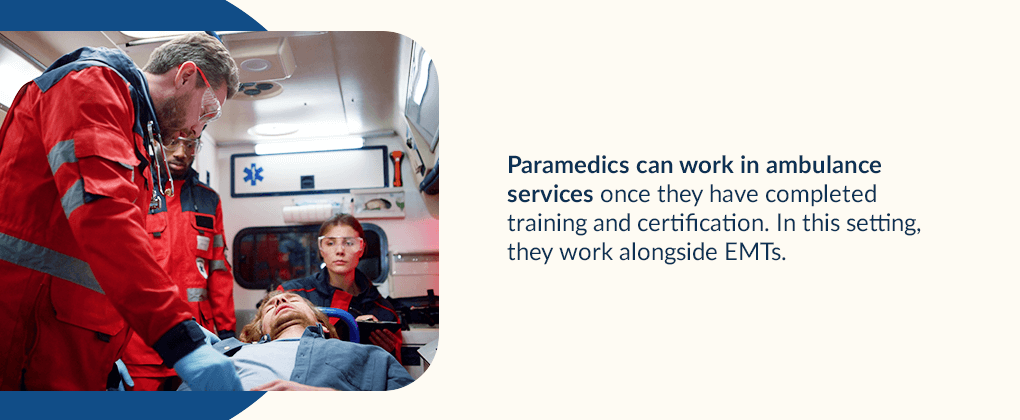
Paramedics can work in ambulance services once they have completed training and certification. In this setting, they work alongside EMTs. They can also work for air ambulances and fire services.
EMTs and paramedics share several job duties, such as:
In addition to the above, paramedics are responsible for the following duties:
According to the U.S. Bureau of Labor Statistics (BLS), the job outlook for EMTs and paramedics is expected to grow by 6% between 2023 and 2033. That would equate to over 19,000 job openings annually for 10 years.
Each profession’s pay can vary based on different factors like location, work setting and experience. Of course, the main factor at play is the profession itself, with paramedics earning more than EMTs.
According to the BLS, EMTs earned a median annual salary of over $41,000 in May 2024. EMTs can potentially increase their pay by completing Advanced EMT training. Another way to improve your pay potential as an EMT is to work in different locations, like outpatient care centers and private general medical and surgical hospitals.
BLS data shows paramedics earned a median annual salary of over $58,000 in May 2024. This is a significant hike in salary potential compared to EMTs. The same data shows paramedics can earn more in local government, excluding education and hospitals, and physicians’ offices.
Got any lingering questions on your mind? Please reference these EMT and paramedic FAQs.
An EMT can become a paramedic by completing additional training, an accredited paramedic program and passing the NREMT certification exam. You’ll also need to acquire applicable state licensure.
Paramedics are responsible for more advanced emergency medical care duties than EMTs. Paramedics must undergo more complex training and build an advanced skill set. They’re also responsible for a wider set of responsibilities.
EMT and paramedic training and certification differ — paramedics are authorized to perform more advanced medical procedures than EMTs, and so they tend to earn more than EMTs in the U.S. However, average salaries vary based on location, work setting and experience.
To become an EMT or paramedic in Massachusetts, you must complete the NREMT certification at the corresponding level. These levels include EMT-Basic, Advanced EMT or Paramedic. After completion, you must apply for state certification through the OEMS. Both professions must also obtain a CPR certification.

EMTs and paramedics play an essential role in health care. They are the first to respond to a scene and help patients needing urgent medical attention. Whether you are starting training to become an EMT or seeking advanced training to become a paramedic, our programs will help you to advance your skill set.
Our EMS and EMT training program will introduce you to the fundamentals of life-threatening emergencies and injuries. Our Paramedic Technology program is a more intense, fast-paced program that equips you to make critical health care decisions under pressure.
If you want to pursue a rewarding career in emergency medical services, take the first step today and learn more about our programs!

Your journey starts with a single step. We have all the information you need to move forward with confidence. Reach out today to learn more about life at The Mount and how to get started.
