Career Training And Certificate Guide




A career change or a new credential can feel like it demands years back in a classroom, lots of paperwork, and a clear sense of exactly where things are headed. That uncertainty can leave capable people feeling stuck right where they are, even when they know a new skill set could open doors. The good news is that many paths do not require starting over from scratch.
Community colleges have built an entire landscape of options for people who want to explore new training opportunities, including career changers testing new ground, working adults weighing continuing education alongside a job and a family, unemployed workers looking to move quickly, and employers trying to keep their teams current.
Between short certificate programs, flexible degree tracks, and coursework designed for real schedules, you can often find a practical starting point that aligns with your goals.
A single community college campus can host five or more distinct types of training at once, each with its own timeline, cost, and end goal. Getting a sense of what sets these programs apart makes the following categories much easier to sort through:
The main difference between a certificate and an associate degree is scope and time. A certificate zeroes in on skills connected to a specific role, field, or next career step, often wrapping up in a matter of months rather than years. On the other hand, an associate degree takes a wider view, usually spanning about two years and pairing general education with career-focused classes to build a more well-rounded foundation.
Both credentials carry real value, and the right choice comes down to individual goals, available time, and the demands of a particular career field. At many community colleges, certificate credits may count toward an associate degree, so students can build one credential at a time without having to start over each time their goals shift.
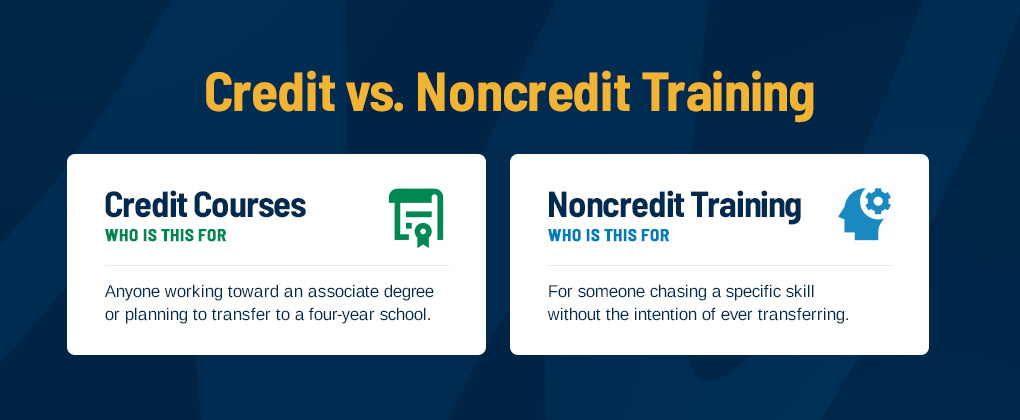
The timeline and end goal usually decide this more than any inherent advantage on either side. Anyone working toward an associate degree or planning to transfer to a four-year school needs credit courses specifically, since those credits count toward a degree and typically qualify for federal financial aid.
For someone chasing a specific skill or credential without the intention of ever transferring, noncredit training, often called continuing education or community education, can offer a faster, more flexible route, depending on the program.
Not every career training program requires a multiyear commitment, and that reality may surprise many people who assume that all education takes years to complete. Short-term career training programs in Massachusetts often help students build career-focused skills in a matter of weeks or a single semester. This can be a practical option for anyone who needs a credential on a shorter timeline.
That kind of quick turnaround takes different shapes depending on the program. Some short-term workforce training programs run for one semester and focus on a specific, in-demand skill area. In contrast, other online career certificate programs are self-paced, giving students the flexibility to work through coursework around their own schedule.
Either format could be a reasonable fit for someone who wants a credential quickly or is testing the waters before committing to a longer program.
Career training and certificate programs work for a wide range of people, each carrying different concerns, timelines, and reasons for exploring a new path.
People switching industries entirely are a core audience for career change programs across Massachusetts, and their situation differs from that of someone simply advancing within a field they already know. Leaving an established career for a new one raises questions about time commitment, whether starting from scratch is truly necessary, how a new class schedule fits into an existing routine, and where to even begin.
Certificate programs can help address some of these concerns by offering focused, field-specific training without requiring years of prior background in the new industry.
In practice, this looks like targeted credentials built around real job requirements, coursework that can support adult learners as they build field-specific skills, and credits that may stack toward a full degree later for students who want to keep building.
Many students returning to community college are working adults holding down a full-time job, raising a family, or both, which leaves little time in the day for a nine-to-five approach to coursework. Rather than expecting students to rearrange their entire lives around a fixed class schedule, many adult career training programs in community colleges lean into evening sessions, weekend courses, smaller class sizes, and advising built around the realities of adult life.
Once someone has decided to go back to school, many community colleges also offer support resources for student parents, including help coordinating childcare options around a class schedule. This kind of support can make it easier for working parents to balance school with outside obligations.
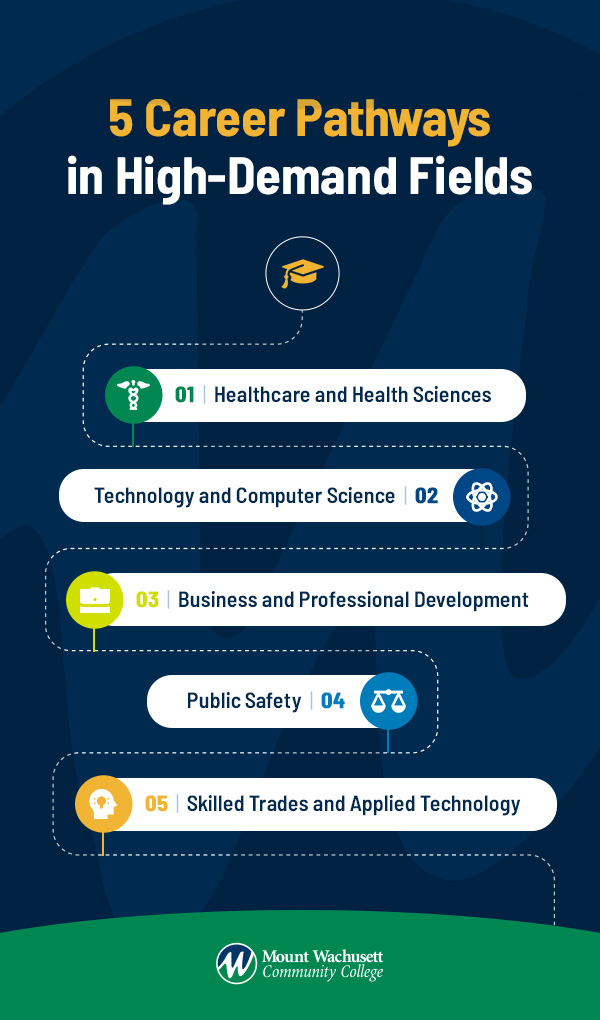
Community college certificate programs, along with degree and training options, span many career-focused fields in the modern workforce, giving students multiple entry points depending on their interests, strengths, and long-term career goals.
Community college training opens several pathways into healthcare and health sciences, including dental hygiene, veterinary technology, allied health, EMT and paramedic-related options, practical nursing, and broader health sciences coursework. These programs serve as pathways into a high-demand field rather than guarantees of a specific job, since the outcome ultimately depends on the student and the effort they put into their training.
Technology offers career-focused pathways available through community college training, including IT support, cybersecurity, computer science, and programming. As businesses of all sizes increasingly rely on digital tools, these programs provide students with a practical entry point into the field.
Certificate programs in this area build skills in business fundamentals, professional development, and management basics, giving students a way to strengthen their resume without committing to a full degree.
The business administration transfer track is structured for students planning to continue toward a four-year school rather than move directly into the workforce, so anyone focused on immediate employment may benefit more from skills-based professional certificate programs.
Public safety pathways available through community college training include criminal justice, emergency medical services, and fire science, each preparing students for roles that serve their local communities. Coursework in these programs blends classroom instruction with practical training tailored to the realities of public safety work.
Technical training programs across Massachusetts, including automotive repair and other skilled trades, can help students prepare for hands-on fields that rely on practical skills rather than years of classroom-only study. Healthcare, IT, business, public safety, and the trades are often discussed as areas where middle-skill credentials can support workforce needs, underscoring the significant opportunity across these pathways.
A few practical factors are important for someone comparing programs, regardless of the specific career path in question. These considerations can help provide clarity and save time in your decision-making process.
Community college tuition is often lower than that of a four-year university, and comparing costs side by side makes the difference easy to see before enrolling in any program. One or more of the following types of financial support may be available, depending on the program type, so it’s worth exploring early in the decision process:
How and when a program gets delivered often matters as much as what the program actually covers, especially for adults juggling work and family responsibilities at the same time. Community colleges typically offer several delivery formats across program types, including on-campus evening classes, hybrid courses that blend in-person and online instruction, and fully online programs that fit around a full-time schedule.
Student support services represent a meaningful advantage of choosing a community college program over self-directed training or purely online alternatives. A Career Services Center may offer support such as academic advising, goal-setting, access to job boards or internship platforms, recruiting events, employer fairs, and resume and interview coaching tailored to a student’s field.
These services can help students make informed decisions, prepare for job opportunities, and build confidence as they plan their next steps.
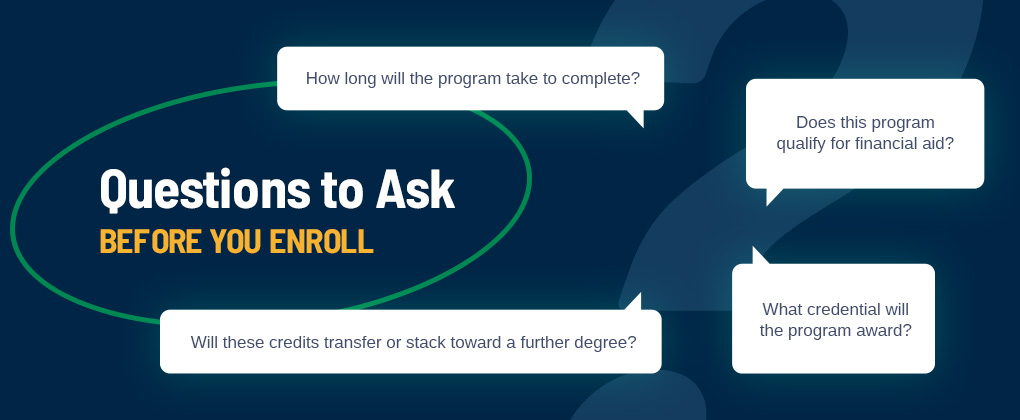
These questions can help you clarify whether a specific program is the right fit:
How long will the program take to complete? Program length varies widely, from a few weeks for some certificates to about two years for an associate degree, so understanding the timeline up front helps set realistic expectations for balancing coursework with work and personal obligations.
Does this program qualify for financial aid? Not all programs qualify for the same types of assistance, and confirming eligibility early can prevent surprises when it comes time to cover tuition and other costs.
What credential will the program award? The type of credential a program awards can affect how it’s recognized by employers, licensing boards, or four-year schools, so it’s worth confirming before enrolling.
Will these credits transfer or stack toward a further degree? Confirming credit transferability up front can save both time and money later, especially for students who may want to pursue a further degree after completing a certificate.
Getting started with a community college career training program generally follows the same four practical steps, regardless of the specific field or credential a student is pursuing:
Building and maintaining a skilled workforce is an ongoing priority for employers. Community colleges can give employers a practical way to train staff at different levels, from front-line workers to leadership teams planning their next move, through job training programs in MA delivered on-site, virtually, or on campus.
As part of Massachusetts’ workforce development, employers can also access the Workforce Training Fund Program, a state grant program that reimburses businesses for eligible workforce training costs. Some community colleges provide free grant-writing support to help employers navigate the application process, which can otherwise feel like a significant barrier for smaller businesses.
Whether you’re changing careers, building new skills, or exploring what comes next, the right training path can make the process feel more manageable. Mount Wachusett Community College (MWCC) offers a clearer path forward, with more than 70 degree and certificate options and flexible class options designed with real schedules in mind. A dedicated Career Services Center supports students as they plan their next steps, prepare for opportunities, and progress through their program.
Ready to take the next step? Apply for free and skip the essay entirely, with rolling admissions giving you more flexibility around when to begin. If you are interested in Mount Wachusett Community College certificate programs, MWCC career training, or MWCC workforce training, you can request more information to find the right fit.

Your journey starts with a single step. We have all the information you need to move forward with confidence. Reach out today to learn more about life at The Mount and how to get started.
