
If you’re considering studying for an early childhood education (ECE) degree, you may have questions about what to expect, your career choices and the earning potential. With an estimated 65,500 annual job openings for preschool teachers alone, you’re certainly not alone in being curious.
If you want to pursue a career that lets you positively impact young children and make a real difference in their lives, an ECE degree is a great option.
What Is An Early Childhood Education Degree?
An ECE degree is a program that helps students prepare to work with children between birth and third grade, or around age 8. This is a crucial period of a child’s growth and development, during which children acquire a wide range of important life and social skills, such as talking, walking and interacting with others.
Early childhood educators play a pivotal role in helping young minds learn the fundamentals of life while encouraging their individual personalities to flourish. This is also a time when certain learning disabilities or speech and language impairments start to manifest — teachers are often the first to notice warning signs and alert the parents so they can seek a formal diagnosis and work with the school to identify which accommodations will help the child thrive.
Who Should Consider A Career In Early Childhood Education?
Earning a degree in ECE is an excellent investment if you have a passion for children and want to help them develop into healthy and independent individuals. While it’s a rewarding and exciting pathway, this field of study is also not as simple as many assume. Early childhood educators need to wear several hats and be cognizant of their students’ educational, behavioral and developmental needs. ECE instructors teach all curriculum areas, including language and literacy, visual arts, math, motor skills and social sciences.
You may enjoy and succeed in an early childhood career if you have a strong ability to:
- Lead and motivate: ECE professionals may find themselves in challenging positions where they must utilize their leadership abilities to motivate and encourage students to do the right things. You might also serve on various leadership boards, clubs and outreach planning committees.
- Face obstacles with persistence: The educational landscape is always changing, and factors like low pay, lack of support from the administration or limited resources are often realities of being a teacher. Knowing that you’re making a difference in a child’s life can encourage you to persist, even on the most difficult days.
- Maintain patience: Young children are still learning to self-regulate and manage their emotions, which can be facilitated with a patient teacher. Educators must have a long fuse for a roller coaster of emotions as children learn to focus and pay attention. You should also have a firm grasp on your own emotional regulation — managing the highs and lows proactively can help reduce stress and the chance of burnout.
- Think creatively: You’ll need to design lessons that captivate young children and allow them to learn via hands-on activities. Every child has their own interests, learning styles, personalities and cultural customs. A good educator understands how to navigate these differences to create memorable, engaging learning.
- Embrace flexibility: Whether children arrive late to class one morning, a partner teacher is out or an evaluator swings by for the day, teachers may be called upon to make last-minute changes to planned projects. The ability to transition between hats with ease will be an asset.
- Infuse energy and passion into your work: Energetic youngsters require an active teacher. Early childhood educators must also infuse life into their classrooms by establishing an appealing environment that interests young children. The more you care about your work, the more your students will learn to care about their participation in it.
- Communicate well with others: Building and maintaining an open and supportive relationship with students and their parents may make or break a child’s experience. Strong communication skills will also help you establish a strong support network with peers and administrators.
You can customize your ECE further by pairing your major with a minor or specializing in a specific style of teaching or classroom environment. For example, minoring in psychology, sociology or child development will strengthen your foundation for connecting with and understanding students, while special education training may expand your career options.
What Jobs Can You Get With An Early Childhood Education Degree?
A degree in early childhood education will often lead to jobs within the school system or other kinds of child care facilities. Some of the specific jobs you can get include:
- Preschool teacher: A preschool teacher plans educational activities and supports children who aren’t old enough to be in kindergarten. A preschool teacher’s job role includes preparing and teaching lessons, overseeing learning activities and tracking student progress.
- Special education teacher: Special education teachers do vital work with children under 8 who have a disability and need a little more support. Your duties may include guiding and evaluating students, defining academic objectives and altering materials for the children with specialized needs.
- Child care center director: This job involves acting in a supervisory role to manage a learning center for younger children. Directors also oversee teachers to ensure educational requirements are met and taking responsibility for business matters and finances.
- Child care worker: A child care worker usually conducts their duties outside of a typical classroom setting. This kind of position may include a range of tasks, including overseeing children during the day and setting up class timetables.
- Nanny: A nanny is involved in a child’s everyday care. This will typically include preparing meals, driving them to after-school activities and overseeing children in their homes. While not every nanny position requires an ECE degree, having one will help you stand out from other applicants and put you in a position to seek higher-paying roles.
What Is The Average Salary For An Early Childhood Teacher In Massachusetts?
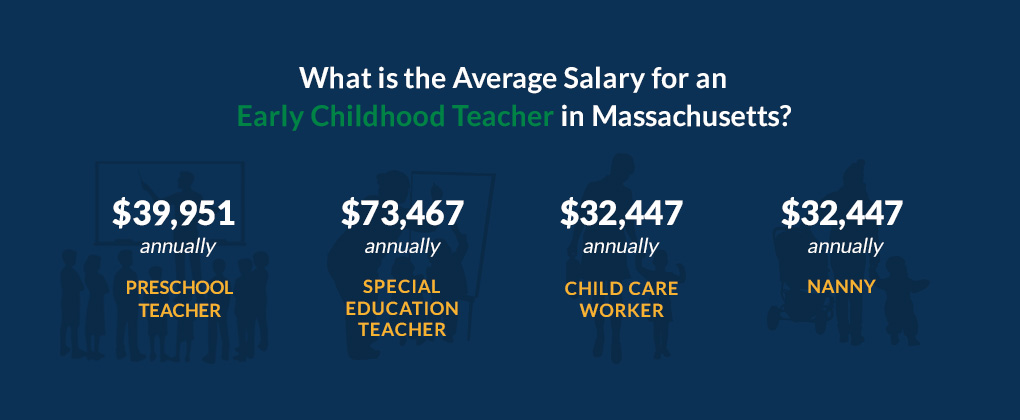
The average early childhood educator salary in Massachusetts is $58,525, which is 24% above the national average. While this salary range will vary based on the specific job title, education and level of experience, here are some other average salaries for jobs in this area:
Which Early Childhood Education Degree Study Is Right For You?
There are several ways to obtain an early education degree. Mount Wachusett Community College’s Early Childhood Education program prepares students for careers in education and care. However, it’s important to understand which pathway is right for you. There are several degree and certificate options available to MWCC students:
- Early Childhood Education Career Degree (ECC): This kind of early childhood education degree is best suited for people looking to work in a preschool or child care center.
- Early Education and Care for Exceptional Children (ECEC): This program is an associate degree track for educators who work with or have aspirations to work with children with specialized needs.
- Early Childhood Education Transfer Degree (ECT): Suited for students looking for a teaching career as a Lead Teacher with Preschool Certification. This degree program equips you to take the Massachusetts Tests for Educator Licensure (MTEL). Graduates will also be able to transfer to a 4-year institution to continue on toward a bachelor’s degree.
- Liberal Arts Degree (LAEL): This degree track prepares you to transfer into a state college or university program in Elementary Education with MassTransfer eligibility. It involves taking a combination of liberal arts and childhood education courses and prepares students for the MTEL to satisfy Massachusetts early education licensure requirements.
Early Childhood Certificate Programs
Early Childhood Certificate programs help both current educators seeking to increase their qualifications and new students interested in an early childhood education career. MWCC’s certificate programs include courses specifically designed to develop skills in health and safety, curriculum plans, child development and more.
- Early Childhood Certificate Programs (ECE): This program educates and prepares students to successfully enter professional work with children from birth to age 5. The ECE certificate program also includes a practicum to gain real-life experience.
- Early Childhood Foundational Certificate (ECF): This certificate study has been designed to align with EEC requirements for Lead Teacher, including recent revisions, to fit newly proposed credentialing systems. It also contains several of the foundational courses needed as part of the ECE MA transfer pathways.
- Child Development Associate Credential (CDA): MWCC’s CDA program provides 120 hours of supervised experience and training to students looking to gain a professional credential and teach young children. The program also follows the National Child Development Associate Credential (CDA) curriculum.
The Early Childhood Education Program courses at Mount Wachusett Community College provide students with the opportunity to earn an Associate Degree in Early Childhood Education through practical learning, skills and competencies in early childhood theory.
What Are The Massachusetts Tests For Educator Licensure (MTEL) Requirements?
All aspiring early childhood teachers in Massachusetts are required to pass the Massachusetts Tests for Educator Licensure (MTEL) or an already-approved alternative assessment. This includes passing tests that focus on communication and literary skills to ensure you can communicate effectively with students, adults and other teachers. You will also be tested on your literacy skills and subject matter knowledge.
Mount Wachusett Community College helps students prepare for these tests via our Early Child Transfer Degree and Liberal Arts Degree courses, both of which provide the knowledge needed to pass the MTEL.
Start Your Early Childhood Education Degree At MWCC

Mount Wachusett Community College offers students affordable, high-quality education and training. Our early education degrees curriculum will equip you with everything you need to begin a career working with children aged 0-5. The program at MWCC has a high job placement record, flexible programs and opportunities to obtain real-world experience.
Request more information today or complete your free application online to start your career in ECE.


